The project explores how applications can encourage sustainable fashion practices among GenZ. Through user-research, I investigated the motivations behind second-hand shopping and identified opportunities to make sustainable choices more accessible and engaging.
An android application that promotes sustainable fashion by allowing users to trade second-hand clothing instead of buying new ones. Addtitionally, the application will educate users through sustainability ratings and ethical information about clothing brands

This project follows the Design Thinking Method. The focus was to understand user needs and create an engaging digital experience.
For the empathizing phase, my focus was understanding why GenZ's shop second hand, how frequently and what they look for.
This was the main research question:
How can a mobile app effectively provide users with information on the ethics and sustainability of brands, and incentivize conscious consumerism?
To better understand their needs, pain points and opportunities when engaging with second-hand platforms, these insights were gathered through interviews with the target users. I conducted a SWOT analysis on competitors to understand what makes them successful, their posision in the market and how I could take advantage of their weaknessses.
Through affinity mapping, the research insights were divided into two categories, financial reasons and sustainability reasons.
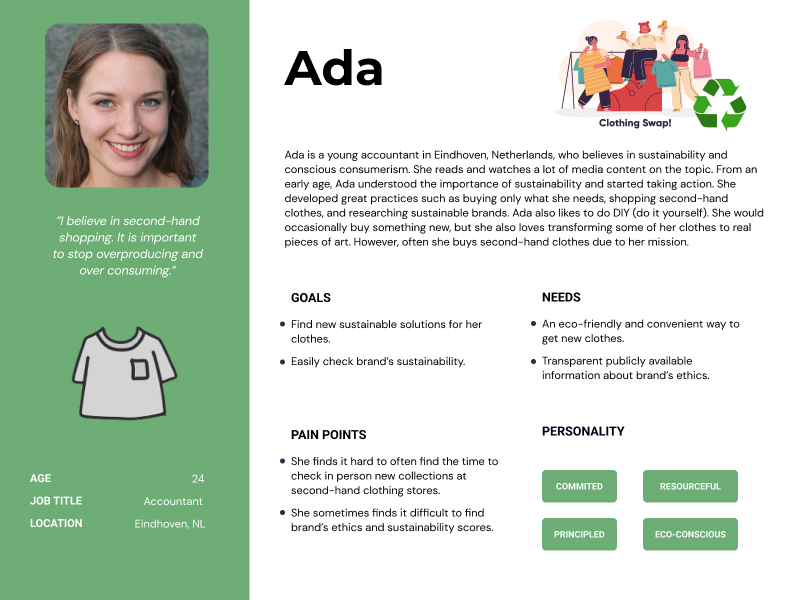
The insights played a key role in creating the two Personas:
In the Ideation phase, several ideas were explored. The ideas ranged from brand rating based on sustainability with more information, like a knowledge base to
a second-hand trading platform. The chosen concept was selected based on the insights gathered from the interviews and research. Creating a platform
that is affordable and supports users to shop sustainably while also providing a knowledge base that users can explore to find sustainable brands.
Final idea: An android application that promotes sustainable fashion by allowing users to trade second-hand clothing instead of buying new ones.
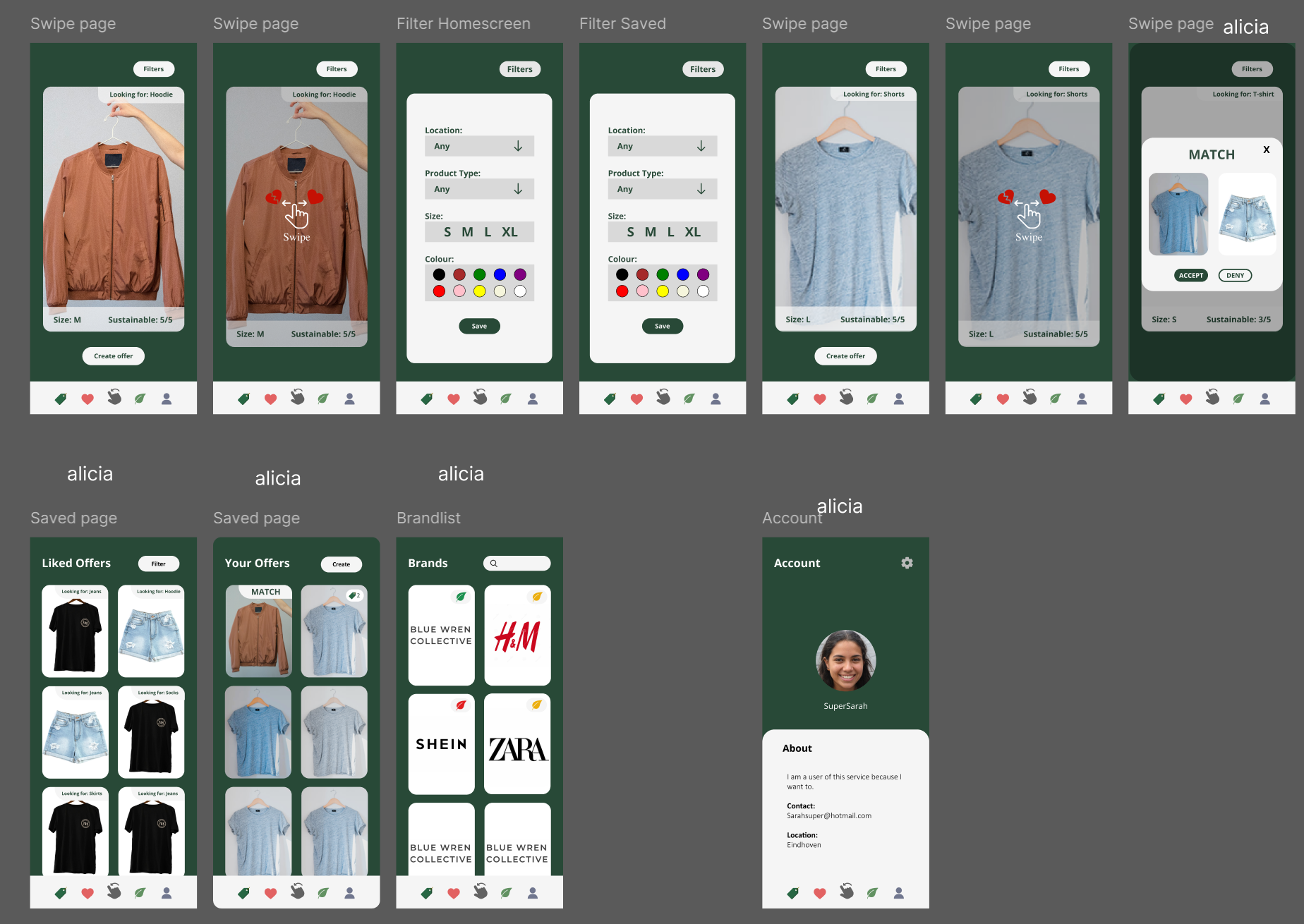
Users can create offers, browse and like clothing listings, receive matches, and communicate with others users through an integrated system to arrange exchanges.
Addtitionally, the application will educate users through sustainability ratings and ethical information about clothing brands.
To visualize the concept, I began prototyping the concept to determine the layout for the various pages. The prototype
was tested with the target audience to identify issues early on such as the functionality, design, navigation and the intuitive design of the application.
Furthermore, to gather insights from the target audience to make informed decisions in the future.
Based on the feedback gathered from the usability tests, I developed the next prototype iteration. The iteration was tested again with the target audience. The feedback was implemented into the final version of the design.